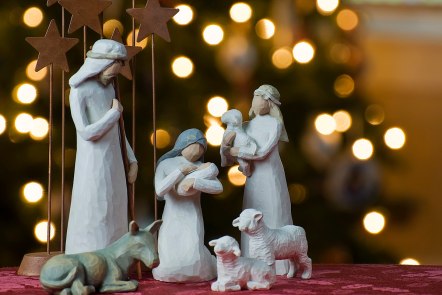
 Is Christmas a real Christian holiday? It may seem like an odd question, but it’s one that gets a lot of attention in some quarters. It’s become something of an online tradition, really: this time of year, a few articles and videos will surface that claim to expose a Christmas conspiracy. The piece will argue that, although Christians claim that “Jesus is the reason for the season”, in fact, that’s not the case at all. They then go on to make a number of claims in a quasi-conspiratorial tone. These articles and videos tend to repeat the same claims with the same mixture of out-of-context historical data and slippery argumentation to suggest that, somehow, Christmas is not really a Christian holiday at all. I think this conclusion is demonstrably false and even silly, and I’d like to explain why.
First, let’s establish the core claims at the heart of many of these videos and articles:
- We don’t actually know when Jesus was born, therefore December 25 isn’t really Jesus’s birthday.
- Other religious groups–e.g. those who worshiped Mithra–celebrated December 25 as a major feast. Christians chose this day in order to compete with such celebrations.
- Some Christians (e.g. Puritans) actively suppressed the celebration of Christmas, in part because it was often celebrated with lots of alcohol. This suggests that, for many, Christmas was more about partying and gifts than about religion.
- Many Christmas traditions–including the use of pine trees–have nothing to do with Jesus and come from pre-Christian European customs.
Now, each of the above claims has a solid historical fact behind it, and so, taken just as historical facts, there’s little to argue with. The problem is that people will take these well-established points and try to fashion a further argument from them: namely, that Christmas “isn’t really a Christian holiday at all.” This is the sticking point. People move from solid claims to a mangled conclusion through fallacious reasoning. I’d like to address each claim in turn and show that, although the historical kernel in each is solid, none suggest in any way that Christmas is somehow an illegitimate holiday or some kind of elaborate ecclesiastic conspiracy.
First claim: we don’t actually know Jesus’s birthday
Claim one begins with an undeniable truth: although the vast majority of historians and text-scholars interested in the subject agree that Jesus of Nazareth existed, we have no idea when he was born. So, December 25 could be Jesus’s birthday, but it seems no more likely than any other date. But to argue that this means that December 25 can’t be properly celebrated as Jesus’s birthday, or that this date could not become fixed as the day on which Jesus’s birthday ought to be celebrated, is fallacious.
To see why, consider this example: many Somali refugees share the same birthday on their government-issued documents: January 1. This puzzled me when I first noticed it, but after asking around, I learned that this date was assigned to these particular refugees because no one–not even the individuals themselves–knew when they were born. (Exactly why is a little unclear to me. It may be the case that Somali culture simply doesn’t stress celebrating birthdays, or it may be because so many Somalis were orphaned at a young age during the civil war(s) in that country, or some combination of these and other reasons.) January 1 was assigned as their date of birth for government documents simply for bureaucratic expediency.
Now, say that I wanted to throw a birthday party for three different Somali refugees, each of which had January 1 listed as their official date of birth. I could just throw one giant part on the first of the year, but this seems like a bad idea for a number of reasons: first, each man would not feel that he was being celebrated himself, he would have to share the day. Second, none of the men might feel that this date held any significance for them; indeed, throwing a party on this date might simply remind them of sad realities about their past. Third and perhaps most significantly, most Americans will have celebrated New Year’s Eve the night prior, and probably won’t be interested in attending a birthday party the next day.
What should I do? Here’s one solution: soccer is popular in Somalia. Let’s say that each man has a different favorite player: one loves Cristiano Ronaldo, another prefers Lionel Messi, the third is more old-school and thinks that no one has topped Pele. Perhaps we could have each man celebrate his birthday on the birthday of his favorite player: February 5, June 24, and October 23, respectively. That seems like a solution that will spread the birthdays out, let each man feel that the day has some real significance for him, and hopefully avoid conflicts with other major celebrations.
Of course, the likelihood that any of these men were actually born on their newly-adopted birth-dates is exceedingly low. But I doubt that anyone would arrive at the party and then loudly explain that today isn’t really Abdihahim’s birthday, because we don’t actually know when he was born. In fact, such a person would not only be rude, but also misguided: a birthday is not a celebration of a day, it’s a celebration of a person. The date of their birth is just a convenient day to set aside for this celebration.
Christmas, too, is the celebration not of a date, not of the particular angle at which the sun sits in the sky, but is rather a celebration of a person–in this case, Jesus of Nazareth, whom we Christians regard as the Messiah. Not knowing the date of his birth in no way prevents us from celebrating his birth and his life. December 25 is at least as good a day to choose as any other.
Second Claim: December 25 was a common pagan holiday
That December 25–or other days just before or after it–was a common day for a variety of religious celebrations in the Mediterranean 2,000 years ago is uncontroversial. The date may have been celebrated as the birthday of Mithra, and it seemed it was definitely set aside for the celebration of Sol Invictus. Some of these differing holidays may also have been conflated and combined by some syncretistic groups (Constantine himself worshiped both Jesus and Sol Invictus; he may also have conflated Jesus with Apollo). Furthermore, it seems likely that the Church chose December 25 precisely to compete, as it were, with these varying mystery religions and local cults. Again, this is all more-or-less well established historically. No argument here.
The question is: what significance does any of this have for contemporary Christians who celebrate Christmas on December 25? Some people seem to think that Christmas is not a legitimate Christian holiday because its date was chosen in the way that it was. But it is not at all clear why this would be the case. Again, since we don’t know Jesus’s actual birthday, December 25 is just as suitable as any other day. If Christians decided that this day made especially good sense as a day to celebrate Jesus’s birthday because it would allow them to party on the day when their pagan neighbors (and frequently, their pagan friends) partied, then, so what? It’s not at all clear what harm has been done here. Again, none of this has been hidden by the Church. Sometimes people will post memes about Mithra and Jesus as if they are disclosing some deeply hidden secret. One gets the sense that such people have read The DaVinci Code and confused its fiction for history.
The Christian church has a long-standing policy regarding human cultural practices: there are some–like, say, human sacrifice–that the Church definitely opposes, and so, if the faith is spreading to a community that practices human sacrifice, that practice must be opposed and ended. There are other cultural practices–like caring for the sick–that the Church actively agrees with, and so, if the faith were spread to a community that already valued caring for the sick, then the Church would probably simply amplify this existing practice. Meanwhile, there are a host of practices that the Church neither supports nor rejects. The attitude to such practices is to simply strip them of any offending element (say, the worship of a pagan deity), and then allow them to carry on otherwise as they did before. This point will come up again below when addressing the fourth claim, but let’s make it clear here: there is a lot of human culture that is simply neutral, as far as the Church is concerned. Having a party on December 25 is just such a cultural practice. It’s neither good nor bad, it’s just a thing people can do.
Now, one option for the Church would have been to simply insist that Christians who wanted to party on December 25 do so without engaging in any pagan religious practices. What the Church did instead was to start its own version of the December 25 party, and link it to Jesus’s birthday: a classic two birds and one stone scenario. Celebrating Jesus’s birthday was already something many Christians would have wanted to do; why not celebrate it on a day when people already party, and thereby strip away any religious elements that would have been problematic for church members?
This history to the celebration of Christmas doesn’t showcase some kind of conspiracy on the part of the early Church. Instead, we just see how pragmatic early Christians were. Any day could have been used to celebrate Jesus’s birthday, but December 25 made sense for the reasons listed above (and probably many others, such as its proximity to the winter solstice, and themes of the renewal of life in the darkest and coldest time of the year). Admitting all of this, though, does no harm to the contemporary practice of Christmas as the celebration of Jesus’s birth. Having admitted this pragmatic genesis to the holiday, we Christians can certainly carry on celebrating it regardless. When Christians gather on Christmas Eve, we really are celebrating Jesus’s birth, despite the fact that December 25 probably isn’t his real birthday and despite the fact that December 25 was probably chosen for all kinds of pragmatic cultural reasons.
Third Claim: Christmas is about drinking and presents!
The third claim one will often hear as a critique of Christmas as a religious holiday is that many Christians–especially the Puritans–actively tried to suppress Christmas because it was often a day of drinking, idleness, raucous games and general laziness and fun. But those who take this historical fact and spin it into an argument against the legitimacy of Christmas are making at least two massive logical errors. First, they are conflating the practices of one very particular (and rather small) Christian group with the practices of Christianity as a whole. Yes, some Christians thought Christmas shouldn’t be celebrated (for a more contemporary example, see the Jehovah’s Witnesses) but most Christians have celebrated this holiday it since its inception. The Roman Catholic Church, the Eastern Orthodox Churches, the Anglican Communion, Lutherans–these groups have recognized the Feast of the Nativity of Our Lord as an important holiday for centuries. Yet, many people in the US, at least, seem to think that because Puritans were against Christmas, all Christians were, at one time, opposed to it. But this is simply false.
Secondly, those who argue that because there was drinking and partying and laziness and games on Christmas, it wasn’t really a religious holiday are basically engaged in a continuation of the error outlined above: Puritans were definitely against drinking and laziness and fun, but most other Christians love those things. Jesus himself drank with prostitutes. In fact, those who seem to think that Christians should be scandalized by Christmas’s history as a day to drink and party only expose their own ignorance: feast days are, and always have been, days set aside especially for partying and drinking alcohol. As one of the principle feast days on the Christian calendar, of course Christians would have been drinking and having fun on Christmas. That’s the point!
Fourth Claim: Christmas traditions are really just pagan practices
The fourth and final claim made by those arguing that Christmas isn’t really a Christian holiday is that so many of the practices associated with Christmas–like decorating a pine tree–are linked with pre-Christian practices that have nothing to do with Jesus. Now, again, the core claim here is perfectly right: there’s nothing particularly Christian about pine trees or tinsel or long socks or mistletoe. But there’s also nothing un-Christian about them either. As I mentioned above, in the section on the second claim, the Church has had a long and very public policy of accepting cultural practices that are good or “neutral”. Decorating pine trees and hanging stockings and kissing under mistletoe are all, in and of themselves, perfectly fine things to do. So, as Germanic people converted to the Church, many of them retained such practices as a part of their Christmas celebration, because they were things that they did beforehand. And Church leaders….said that was just fine. So long as such practices were de-coupled from any worship of a pagan deity or other practice that the Church would have been opposed to, such cultural acts were seen as inoffensive and fine.
Again, this wasn’t some grand conspiracy to crush paganism or fool people. It was rather a completely pragmatic approach to dealing with diverse human cultures. Christianity itself has no fixed language, clothing, cultural practices, aesthetic preferences, etc. It is meant to be a universal faith that can integrate into the full diversity of human cultures. Of course, as mentioned above, at times Christian teachings will conflict with certain practices, and in that case, the Church has (or should have!) insisted that new Christians cease such practices. But the vast majority of human culture is neutral from a Christian theological viewpoint. How we dress, the shape of our houses, what kind of art or music we like–this is all up for individuals and communities to decide as they please.
So: Christmas trees are neither obligatory nor forbidden for Christians (and, of course, it’s worth pointing out that Christian communities not heavily influenced by Germanic culture celebrate Christmas without decorating pine trees. That so many in the English-speaking world seem to assume that all Christians engage in this cultural practice at Christmastime speaks to a broader and un-reflected upon ethnocentrism, even among people who likely think of themselves as worldly and tolerant…) Cultural practices associated with winter that have become attached to the celebration of Christmas among some Christian groups are just that: cultural practices. They are fine, but they are not essential to the celebration of Christmas as the Feast of the Nativity of Our Lord.
Now, all of that said, considering that so many of these practices are basically Christo-neutral certainly does mean that non-Christians can decorate trees and kiss under mistletoe. There’s nothing Christian or un-Christian about doing those things, and if people want to re-constitute the cult of Mithra or decorate a tree in celebration of the solstice, that wouldn’t bother me as a Christian one bit. Have at it! It is only once people start to argue that Christmas is somehow not a legitimate Christian holiday–simply because the celebration of Christmas has been fused with such cultural practices–that I have a problem. Such reasoning is fallacious and, to be honest, lazy.
Of course, there is a whole ‘nother article to be written on this subject pointed in the other direction: we Christians ought to be less worried about decorations and presents and festive music and more concerned to really discern what it means to celebrate Jesus’s birth. But considering the length of this post already, that point will have to wait for a future post. I hope that I have shown that many of the arguments made against Christmas as a Christian holiday are faulty ones. Though built on solid historical claims, such arguments use poor reasoning to arrive at false conclusions. Christmas is a Christian holiday, and an important one at that.
 We’re just a few hours away from Christmas. Yet our Gospel reading for today does not place us hours before Jesus’s birth, but instead hours before his conception. We are stepping nine months back in time. If Christmas is the New Beginning for the world, then today, we hear about the beginning of the Beginning.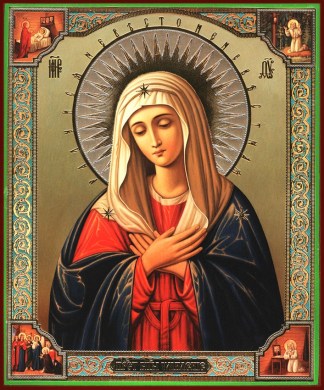
 Throughout my 20’s, my spiritual life was a process of asking, searching, and wondering. Around the age of 21, I realized that I was not convinced by the idea of Jesus’s divinity, and so I began to seek a spiritual community where that doctrine was not espoused, or at least not essential. I ended up worshiping with a
  Wrestling with the Angel