Last week, we dove into the turbulent waters of dualism. I focused my time there pointing out that “dualism” is, as the smart kids say, an overdetermined term: there are (at least!) four different meanings to dualism: what I called 1) ontological dualism, 2) theological dualism, ditheism style, 3) theological dualism, Barthian style, and 4) phenomenological1 dualism.
Attentive readers may remember, however, that I began that post on dualism asking a question about something else entirely—non-dualism. Although I did touch on non-dualist responses to the various modes of dualism outlined, we didn’t dig deeply into it there—so we shall today.
As I pointed out at the top of last week’s post, non-dualism is a trendy, popular word today, especially in many spiritual-but-not-religious spaces who are looking for alternative approaches to spirituality. Many in the west today, both conservative and liberal, tend to act as if the only options are mega-church Christianity or new Atheism. Non-dualism, with its air of mystery, seems to offer a refreshing alternative to both.
Considering that we offered 4 different modes of dualism, one might assume/worry that we will have to investigate 4 different modes of non-dualism here. Fortunately for you, my intrepid but time-strapped reader, things aren’t as bleak as that. Although there are non-dualist philosophical approaches to all 4 modes of dualism outlined, here I want to focus on just two.
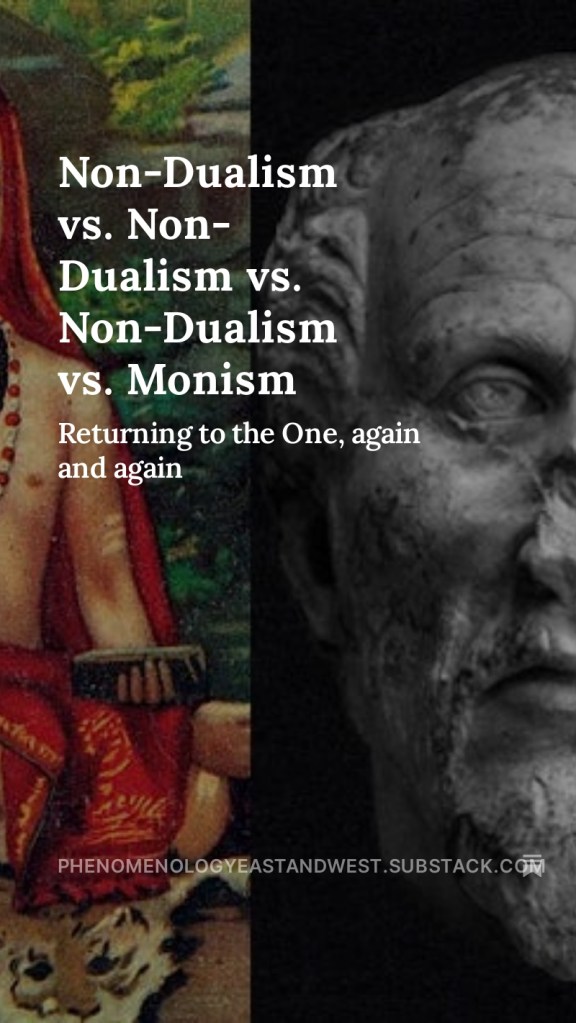
Continue reading on my Substack, Phenomenology, East & West.

 Wrestling with the Angel